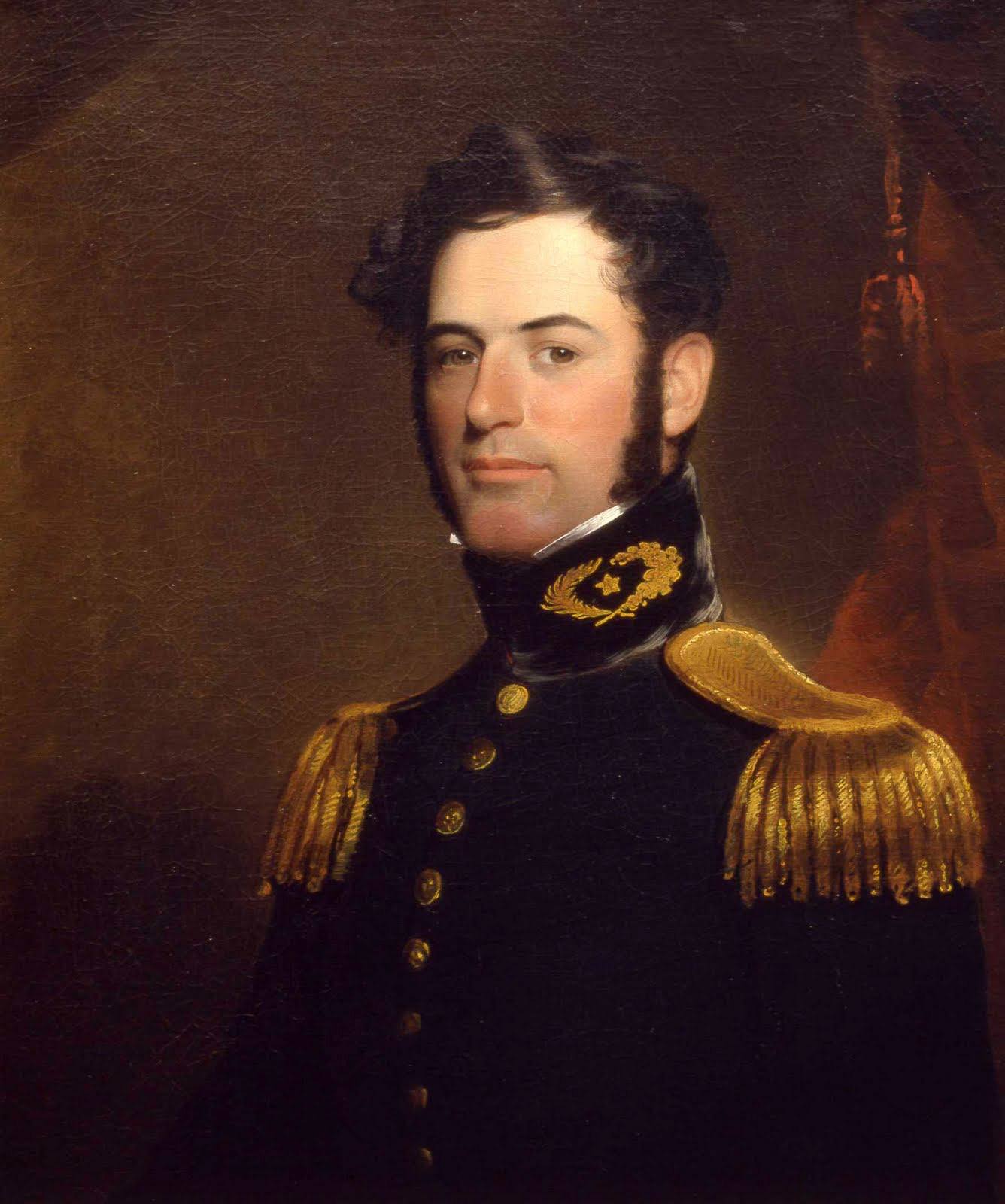
Robert E Lee in 1938
Robert E. Lee Day: Why the South Still Honors January 19th
Published by US Patriot Flags | Preserving Confederate Heritage
Every January 19th, something happens in the American South that the national media rarely covers without controversy — and that millions of Southerners mark with quiet, personal purpose. Robert E. Lee Day. A state holiday in some places, a day of observance in others, and in the hearts of many heritage-minded Americans, simply a moment to pause and remember a man who embodied a code of honor that transcended the war he fought.
This article covers what Robert E. Lee Day actually is, where it’s observed, how it’s commemorated, and why — after more than 150 years — it still matters to so many.
What Is Robert E. Lee Day?
Robert E. Lee Day is a commemorative holiday observed in several Southern states on or near January 19th — the birthday of General Robert Edward Lee, born in Westmoreland County, Virginia, in 1807. It is not a federal holiday, and its official status varies considerably by state, but its roots run deep into the Southern tradition of honoring Confederate heritage.
Virginia was the first state to designate Lee’s birthday as a legal holiday, in 1889 — just nineteen years after his death. By the early twentieth century, several other states including Georgia, Alabama, and Mississippi had added the date to their official calendars to recognize Lee’s military leadership and his post-war role as president of Washington College.
The holiday was never about glorifying war. It was, and remains for most who observe it, an acknowledgment of a man who faced an impossible choice with dignity — and who, in defeat, chose reconciliation over bitterness.
Where Is Robert E. Lee Day Observed in 2026?
The holiday looks different depending on where you are:
Alabama and Mississippi observe it as a state holiday on the third Monday in January, which in most years coincides with Martin Luther King Jr. Day. This combined observance has sparked ongoing debate, given that the two men represent starkly different chapters in American history.
Florida marks January 19th as Robert E. Lee Day by statute. Florida Statute 683.01(d) designates January 19 as Robert E. Lee Day, though no offices or schools close for it.
Tennessee maintains it as a “special day of observation.” State law requires the governor to proclaim each January 19 “Robert E. Lee Day,” a tradition that has continued unbroken since 1917.
Texas observes Confederate Heroes Day on the same date. Texas made “Lee Day” a holiday in 1931, and in 1973 it was renamed Confederate Heroes Day.
Georgia takes a different approach entirely — designating the Friday after Thanksgiving as Robert E. Lee Day, tying the commemoration to a natural gathering of families rather than the January calendar.
Virginia observes Lee-Jackson Day — honoring both Robert E. Lee and Thomas “Stonewall” Jackson — on the Friday before Martin Luther King Jr. Day.
How Is Robert E. Lee Day Commemorated?
Robert E. Lee’s birthday is celebrated in different ways, including marches, parades, wreath-laying ceremonies, and musket salutes. Many publications run editorial notes to commemorate the commander’s achievements.
Museums and battlefields frequently host educational tours that detail the specifics of Confederate military campaigns and the life of Lee before and after the war. In some communities, memorial services are held at local landmarks, featuring wreath-laying ceremonies or period-accurate musket salutes, generally organized by historical preservation groups and descendants’ organizations interested in 19th-century military traditions.
For families, it’s often simpler — a day to tell the old stories, visit a monument, or read a passage from one of the many biographies that have wrestled honestly with Lee’s extraordinary life.
Who Was Robert E. Lee? A Brief Portrait
Understanding why this day matters requires understanding the man himself — beyond the caricatures in either direction.
Robert E. Lee graduated second in his class at West Point in 1829, earning not a single demerit in four years. He served with distinction in the Mexican-American War under General Winfield Scott, earning three brevet promotions for his daring reconnaissance work. By 1861, he was widely considered the finest officer in the United States Army.
Abraham Lincoln offered Robert E. Lee command of the Union Army in 1861, but Lee refused. He would not raise arms against his native state. This was not a decision made lightly. Lee privately opposed secession. He called slavery a moral and political evil. But when Virginia left the Union, his sense of loyalty to home — a value that ran far deeper in 19th-century culture than modern readers often appreciate — made his choice, in his own mind, unavoidable.
He served four years of brutal war, repeatedly outmaneuvering Union forces with far greater resources. And then, at Appomattox in April 1865, he surrendered with the same bearing he had carried through every campaign. Lee told his comrades, “Go home and be good Americans.”
After the Confederate surrender, Lee refused to engage in public bitterness or recrimination against the victorious North, instead urging former soldiers to accept the outcome, obey the restored Union, and contribute to rebuilding the nation. He took the presidency of a small Virginia college — later renamed Washington and Lee University — and spent his final years shaping the next generation of Southern leaders toward education, not grievance.
Influential leaders such as Winston Churchill held Lee in exceptionally high esteem, praising his military genius and personal nobility — describing him as one of the noblest Americans who ever lived.
Why Robert E. Lee Day Still Matters
For heritage advocates, the answer is straightforward: history doesn’t disappear because it becomes uncomfortable. The men who fought under Lee — and the families who sent them — deserve to be remembered as fully human, not reduced to a single political argument about what their flag meant.
For some residents in participating states, the holiday is viewed as a way to preserve regional history and acknowledge the complex lineage of the Southern United States. It provides an opportunity for genealogical and historical societies to focus on the preservation of records from the mid-19th century.
There is also something worth preserving in Lee’s post-war conduct specifically. In an era of rising political hostility and refusal to accept outcomes one dislikes, his example — putting down the sword, going home, building something — carries weight that isn’t tied to the Confederacy at all. It’s simply a model of how a man carries himself in defeat.
That is a story worth telling on January 19th. And every other day.
Fly Your Heritage with Pride
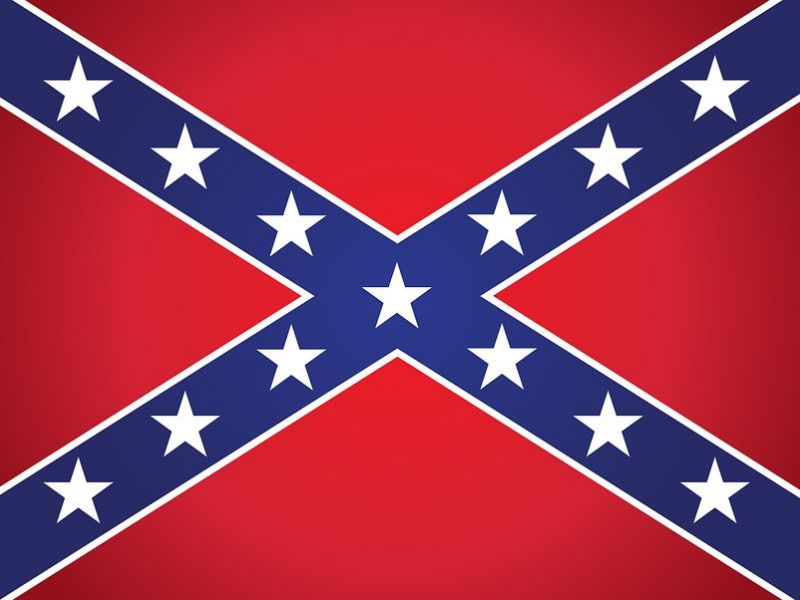
At US Patriot Flags, we carry a full selection of Confederate battle flags, historic Southern flags, and heritage display items for collectors, reenactors, and families who believe that honoring history is not the same as endorsing every aspect of it.
Browse our Confederate Flag collection →
Whether you’re looking for a reproduction Army of Northern Virginia battle flag, a Stars and Bars for historical display, or a gift for the Civil War enthusiast in your family, we have what you’re looking for — made with the quality that heritage deserves.
Tags: Robert E. Lee Day, Confederate heritage, Civil War history, Southern heritage, January 19, Lee-Jackson Day
Category: Preserving Southern Heritage


More Stories
“Big Red” The Citadel Flag
What is the real history of the Confederate Flag?
General Dwight D. Eisenhower’s Reflection on Robert E. Lee